Epoxy floors · Phoenix, AZ
Phoenix epoxy flooring company for warehouses and garages
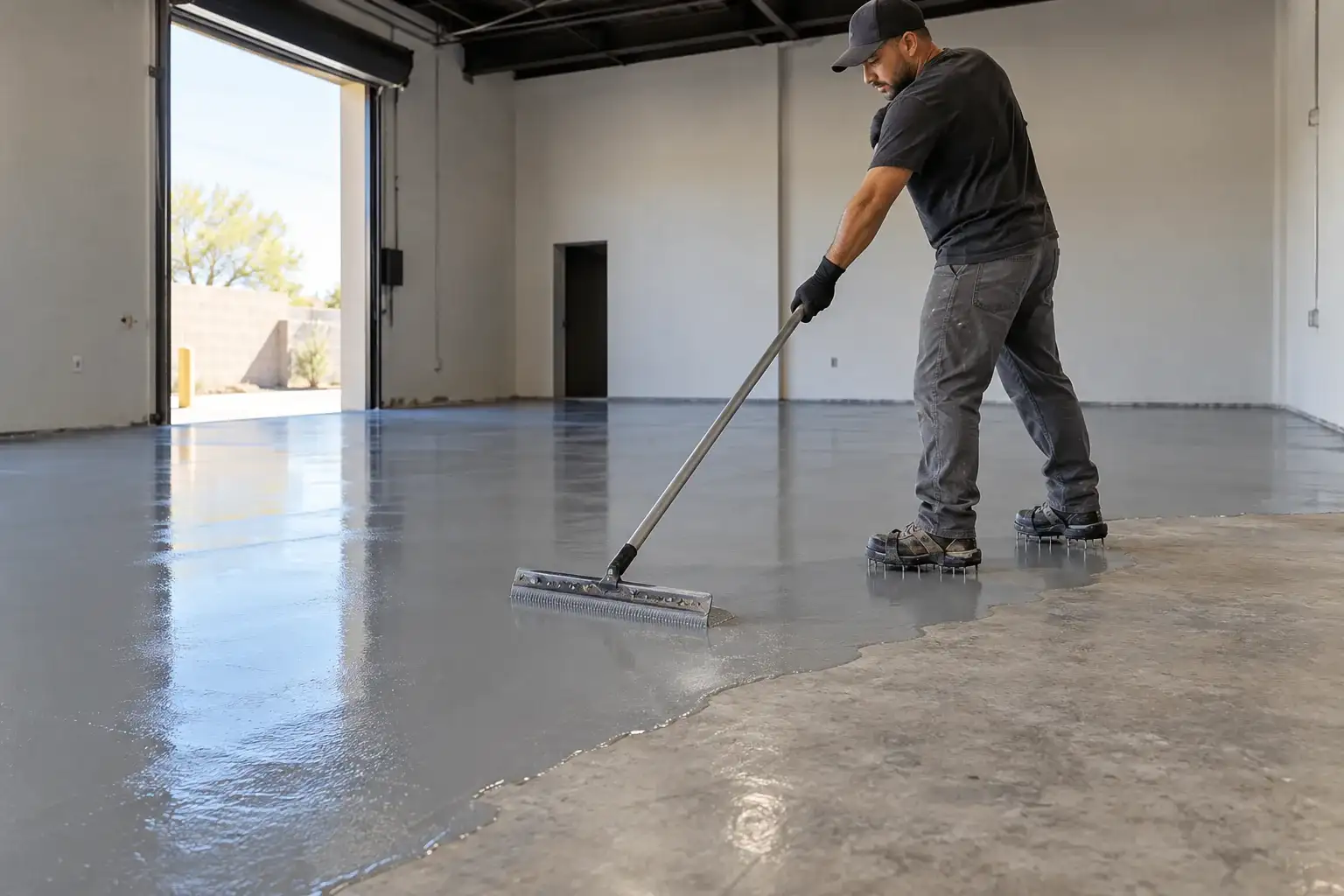
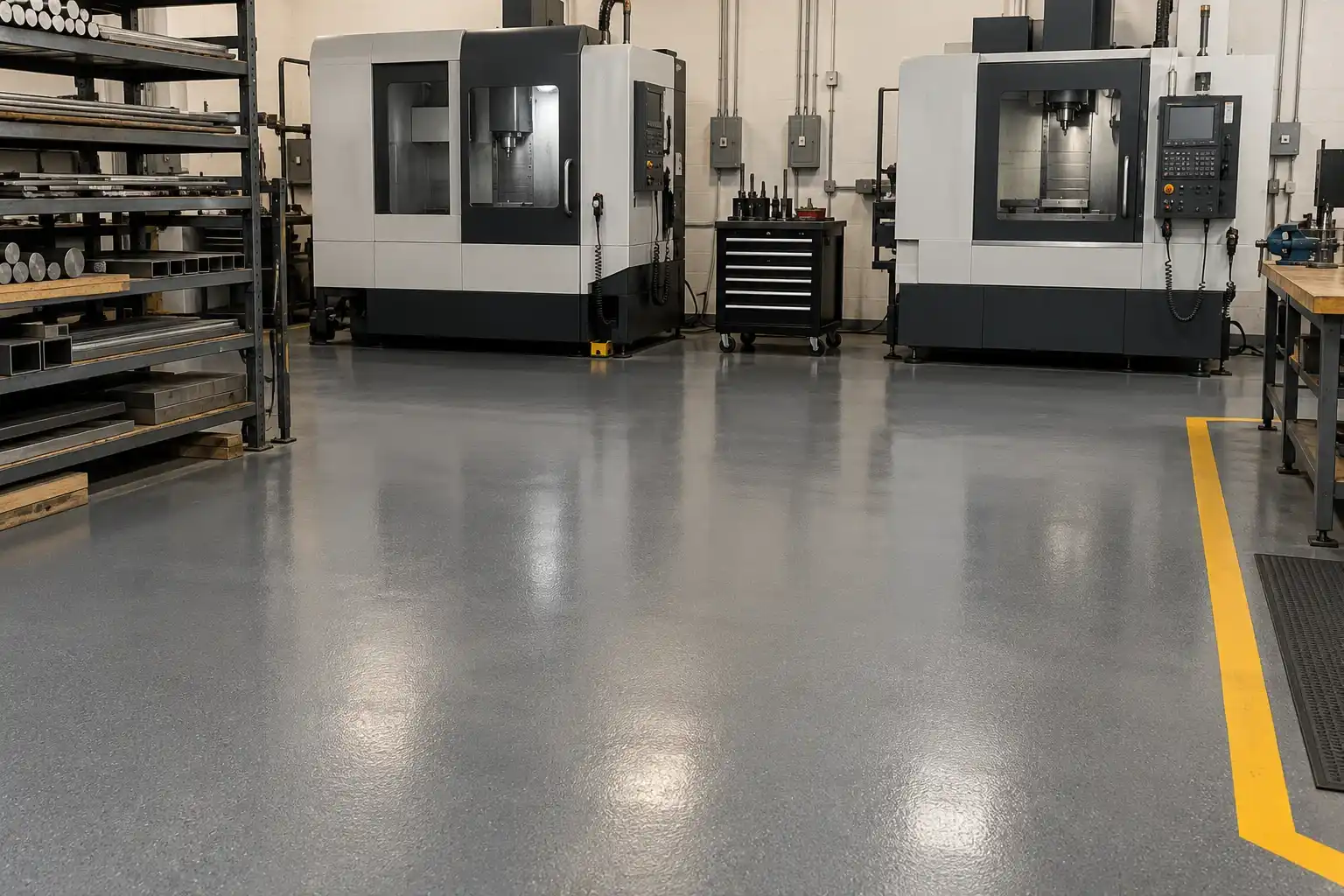
Phoenix slabs are big, flat and in places old: a warehouse aisle south of downtown, a shop bay on Grand Avenue, a garage behind a house built before 1960. Tell us how big the floor is and what rolls across it, and someone from our team calls you back to plan your Phoenix epoxy flooring project.
The slab
What a Phoenix slab is up against
Phoenix reads around 1,088 ft at City Hall, per a USGS 3DEP point query. The housing stock spreads wider than one figure suggests: the median year built is about 1985, about 14 percent of units went up before 1960 and about 36 percent between 1970 and 1989, per ACS 2020-2024 5-year estimates via Census Reporter. 2 garages 3 miles apart can sit on slabs poured 40 years apart, and age is a reason to test, not a substitute for testing. Phoenix answers to 85003, 85008 and 85009 in USPS primary-city records.
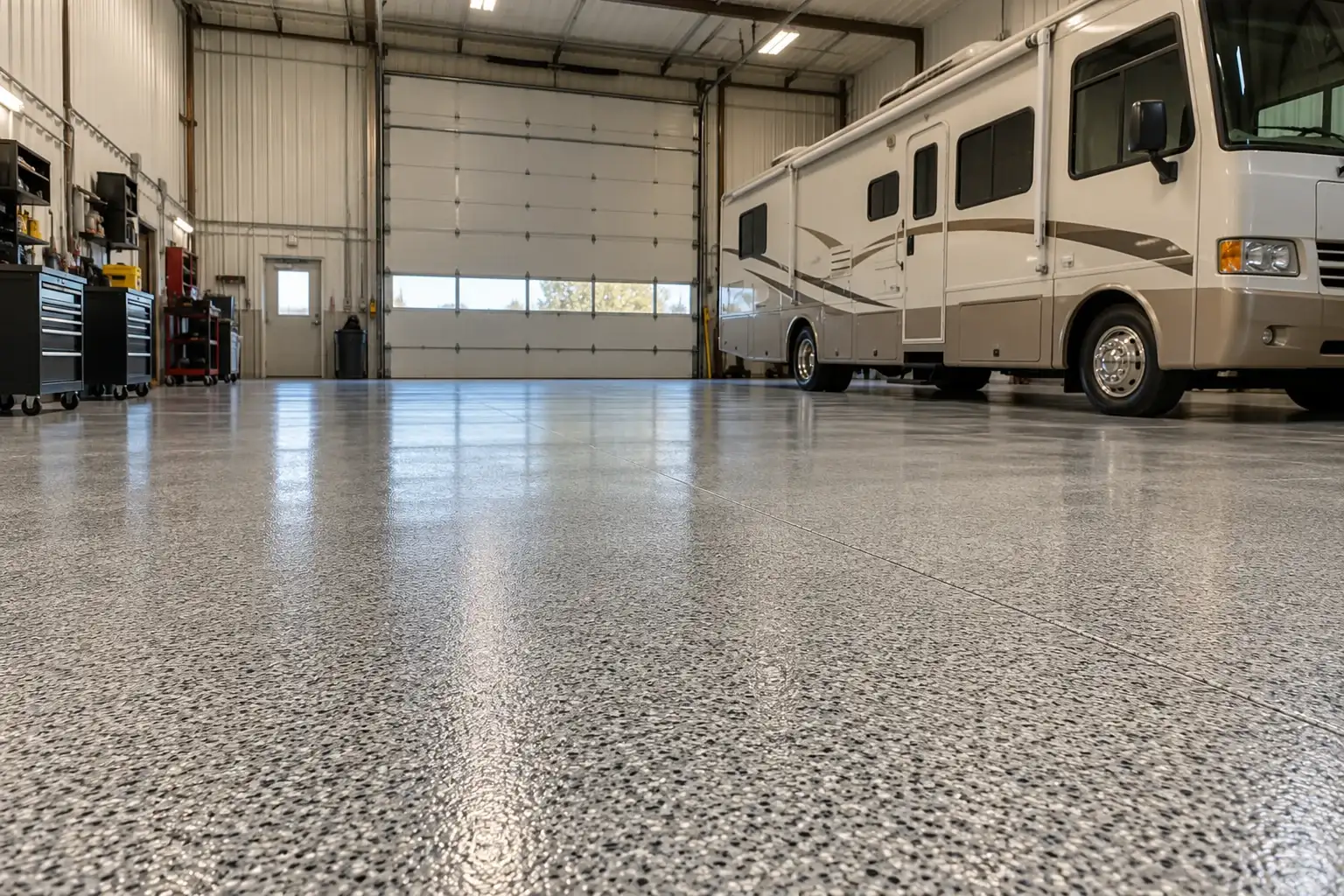
- A system sized to the load, from a 10 to 20 mil solid coat in an office to a 40 to 60 mil quartz build in a forklift aisle.
- Moisture measured with an in-slab probe or a calcium chloride kit before anything gets ordered.
- Cracks and joints cut open and filled with a semi-rigid material that moves with the concrete.
- A written cure window, so racking and pallets come back on a date.
Systems
The floors that fit Phoenix buildings
South of downtown, the City of Phoenix T2050 study describes an area next to the old warehouse district, with much commercial, light industrial and trucking business still along Central Avenue. Grand Avenue, the diagonal roadway that carried traffic toward Los Angeles before the interstate, now has eateries in many of the old industrial buildings, per Visit Phoenix. Between those 2 corridors sits much of the commercial work here.
The soil is the other variable. The City of Phoenix General Plan Safety Element names expansive soils, subject to shrink-and-swell behavior, among the geologic hazards in the Phoenix area, and directs development proposals to assess shrink-swell potential. The Arizona Geological Survey describes the same clay statewide: it swells to many times its original volume when wetted and shrinks as it dries, heaving and cracking floor slabs.
Signs
4 signs a Phoenix floor is failing
A crack crosses the slab and the film follows. A slab that swells in a wet winter and shrinks in June opens at the same line, and a rigid coat splits above it.
The film lifts in sheets at a dock door. Moisture moving up through the concrete pushes from below, and the edges curl before the field lets go.
The forklift lane is down to gray concrete. A thin coat can wear through a traffic lane in months, and the dust under the racking is the slab itself.
A patch at the trench drain moves under a pallet. A feathered patch over a cold joint can break loose, and each loaded pass can take more.
3 steps
How the work runs
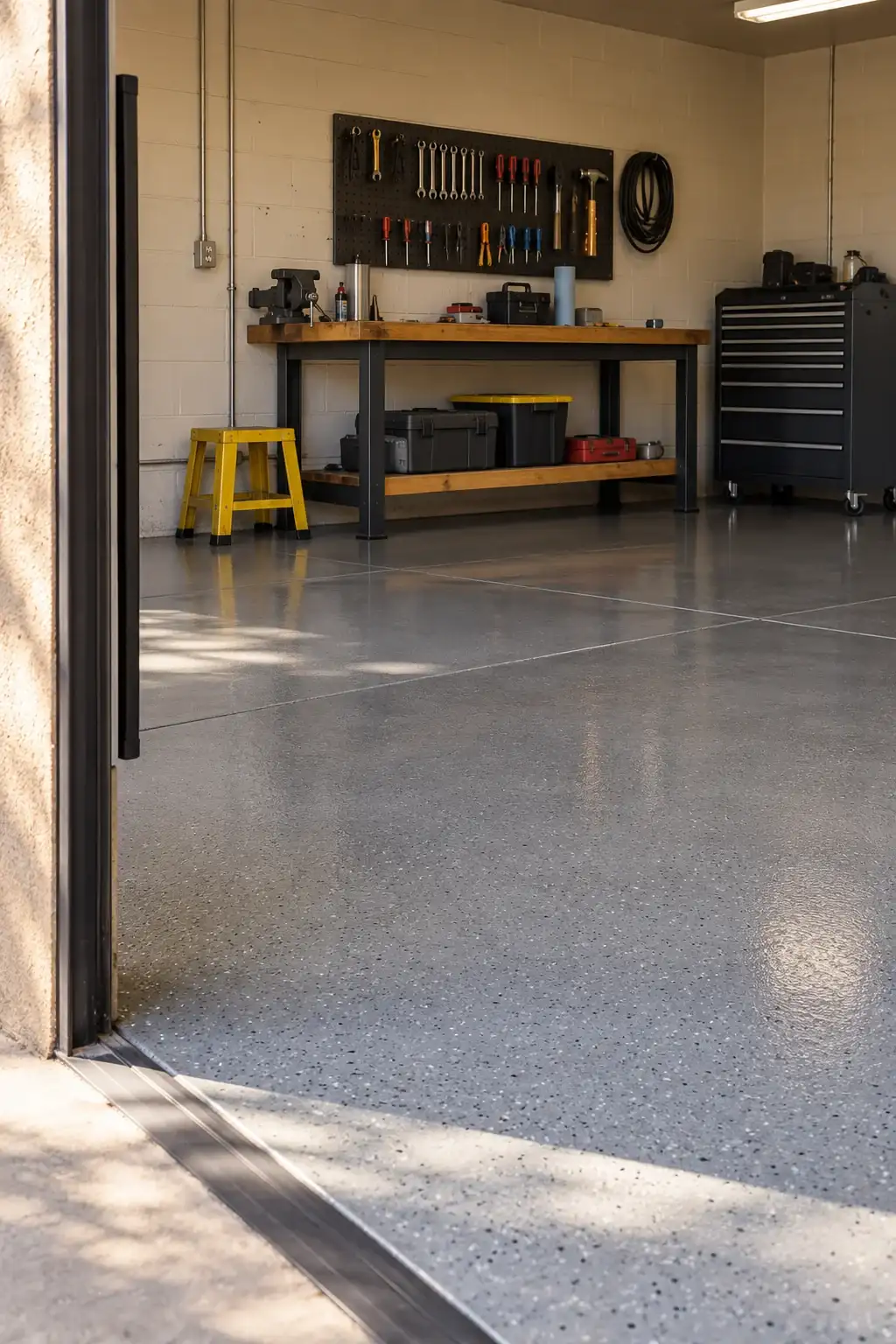
The space gets walked with the load in mind. What rolls, what drips and where the slab has already failed.
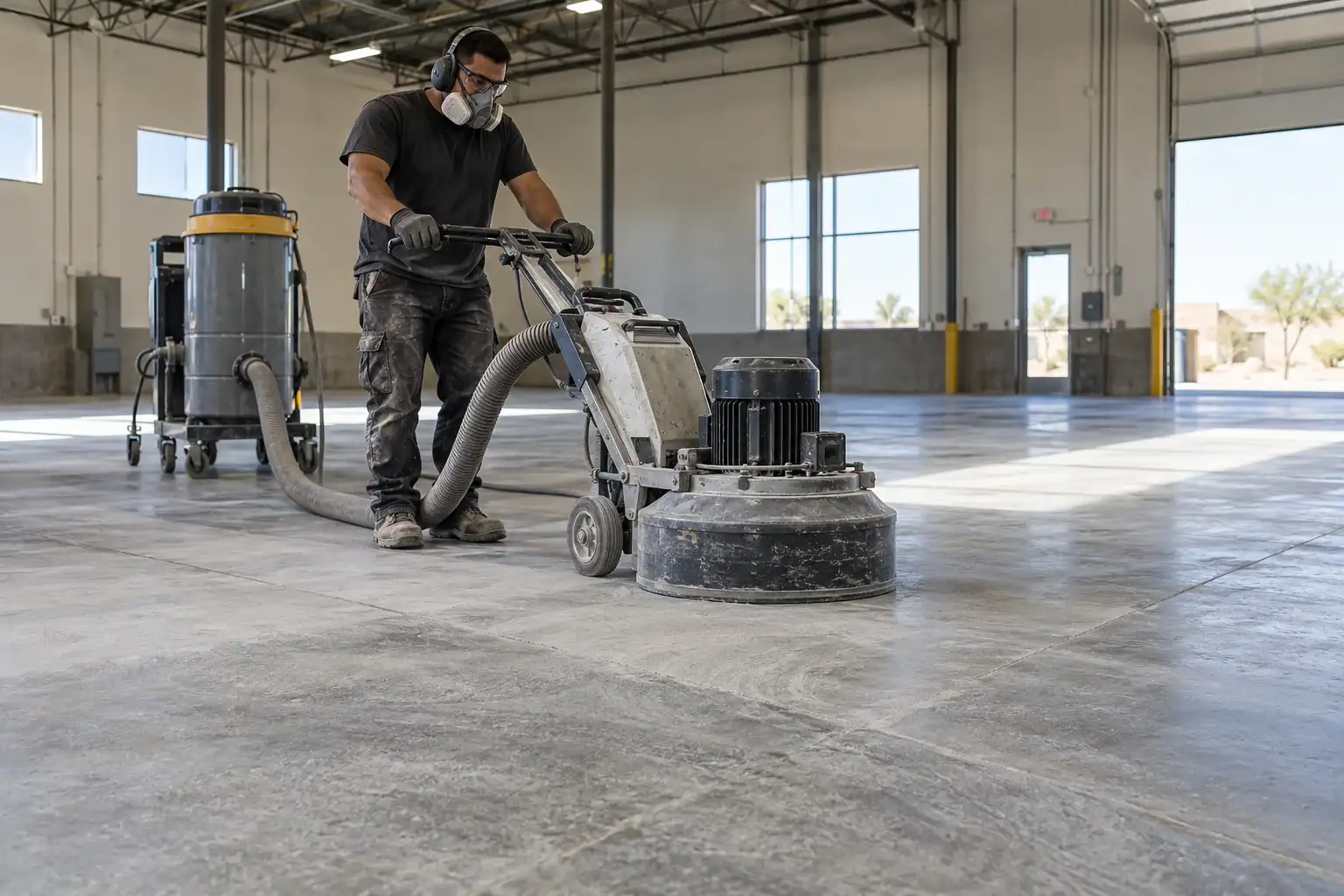
Grind, patch and test. Diamond grinding, crack and joint repair, then a moisture reading before a system is named.
Coat and cure. Base, broadcast and topcoat, then the hours before a pallet or a car goes back on the floor.
Costs
What epoxy flooring costs in Phoenix
The installed range from HomeGuide (opens in a new tab) is $4 to $10 per sq ft, split into $1 to $5 of material and $3 to $5 of labor. A home services cost guide puts an epoxy floor at $3 to $12 per sq ft to install, and an epoxy flooring guide sets professionally installed epoxy at $3 to $15 per sq ft in 2026. A warehouse aisle on a 40 to 60 mil build tends toward the top of the range, an office on 10 to 20 mil toward the bottom.
| Scope | Published range | Source |
|---|---|---|
| Epoxy, installed | $4 to $10 per sq ft | HomeGuide |
| Materials and labor | $1 to $5 and $3 to $5 per sq ft | HomeGuide |
| Epoxy floor, installed | $3 to $12 per sq ft | Home services cost guide |
| Professional epoxy, 2026 | $3 to $15 per sq ft | Epoxy flooring guide |
Published ranges, not a quote.
3 questions
Questions from Phoenix owners
Still have a question? Call (747) 243-2089 and describe the floor.
A garage slab in an older house reads damp. What happens then?
Moisture gets measured before a system is chosen: under 75 percent relative humidity on an ASTM F2170 in-slab probe, or under 3 lb per 1,000 sq ft per 24 hours on an ASTM F1869 test, per a published epoxy guide. A slab over either threshold can need a moisture mitigation step before a coating goes on.
Does expansive soil matter to a floor coating?
It does once the slab moves. The City of Phoenix General Plan names expansive soils among the area's geologic hazards, and the Arizona Geological Survey describes clay that swells when wetted and shrinks when dry, heaving and cracking slabs. Joints get filled with a material that moves.
What holds up in a warehouse aisle?
A 40 to 60 mil quartz broadcast build, per the dry film numbers in a published epoxy guide, because the silica aggregate can take abrasion a 10 to 20 mil solid coat may not. Cracks and spalls at the dock get repaired first.
Keep reading