Service 05 of 06 · Mesa, AZ
Polyaspartic and epoxy coating company in Mesa, AZ
You have 2 products on the table, one garage door that faces west, and no straight answer on which one belongs on your slab. Tell us what parks on the floor and which way the door faces, and someone from our team will call you back.
What you get
A floor that holds its color past the first Mesa summer
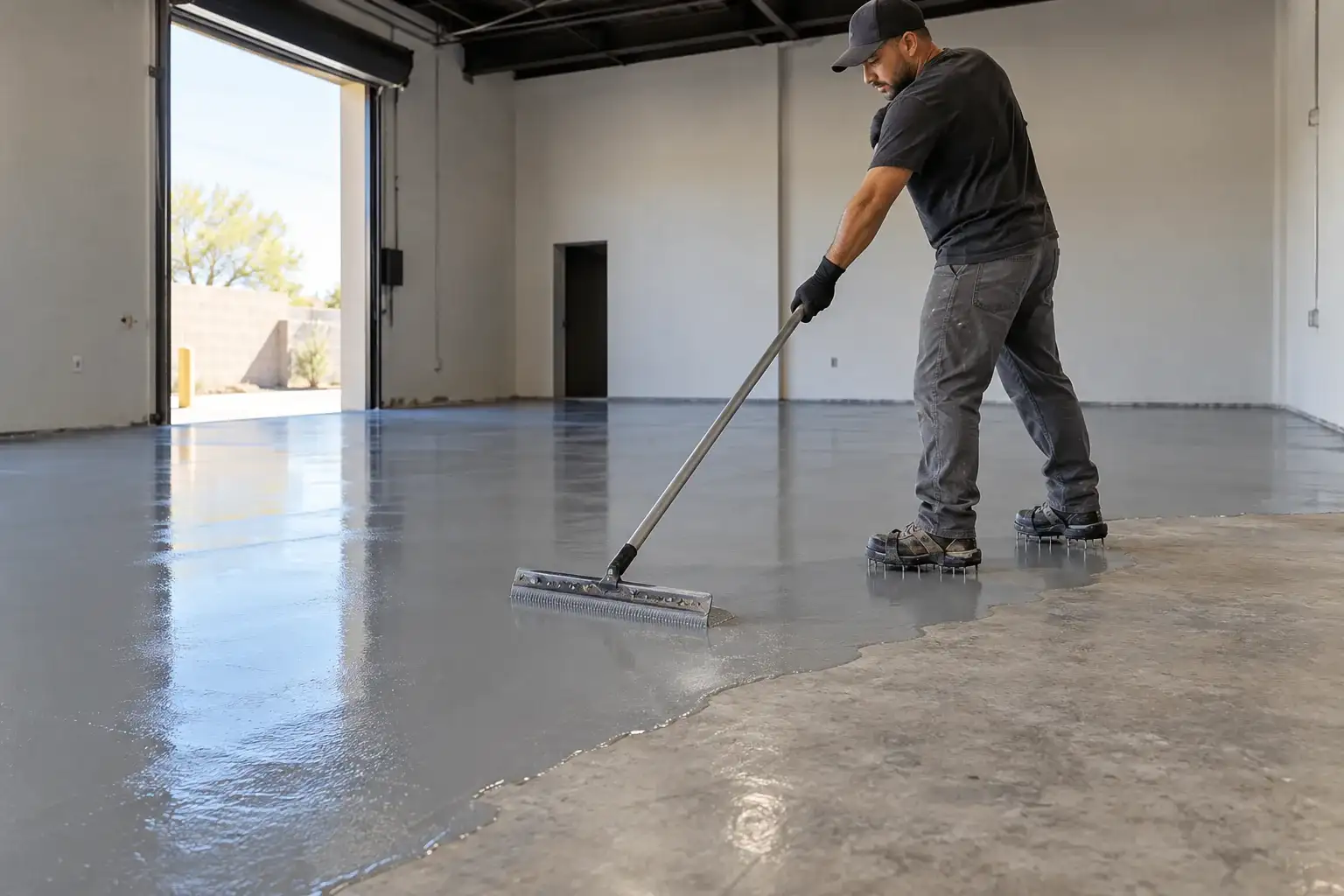
For a Mesa garage, polyaspartic and epoxy are 2 different resins, not 2 brands of the same product, and the reason both turn up in the same garage is that they do different jobs in the build. Epoxy is the base that carries the flake and gives the floor its thickness. Polyaspartic is often the coat on top, the one the light reaches first. Choose the pair for the sun your slab gets and the traffic it takes, and the floor stops being a coin flip.
- A build written down in mils, so you can see what the money buys before work starts.
- A topcoat picked for the afternoon sun a west-facing door takes, not for a showroom.
- Cure times in hours, so a weekend plan is a real plan.
- A slab ground and tested first, because a topcoat can only hold what the base holds.
Signs
5 signs the coating does not match the job
A product name and no film thickness
Polyaspartic and epoxy are not specifications by themselves, and the mil build is what tells you which floor it is.
Direct sun with no UV-stable topcoat
Epoxy carries no UV protection of its own, and a floor in steady sun discolors without a UV-stable coat over it.
Parking on it the next morning
Certain stages can set in 20 to 60 minutes, but vehicle traffic waits 96 hours in warm conditions, so next morning is the wrong clock.
One build used for 2 different floors
A 10 to 20 mil two-coat solid epoxy and a 20 to 30 mil flake build with a topcoat are not the same product.
The slab never got checked
Moisture, oil and old sealer can decide whether any coating stays, and a coating chosen without them is a guess.
3 steps
How it works
Tell us the bay size, which way the door faces, and what parks on the floor
We go over the build with you
Base coat, flake or solid color, topcoat, and the day the floor can take traffic.
The topcoat gets matched to the sun, and the work goes on the calendar
Costs
What the 2 coatings cost in Mesa
HomeGuide publishes polyaspartic coating at $5 to $12 per sq ft, with a 1 to 2 day cure (HomeGuide (opens in a new tab)), and epoxy flooring, installed, at $4 to $10 per sq ft (HomeGuide (opens in a new tab)). The gap is per square foot, so it grows with the bay, and it buys 2 things: a faster return to service and a film that holds color in sun.
| Coating | Published range | Source |
|---|---|---|
| Polyaspartic coating, 1 to 2 day cure | $5 to $12 per sq ft | HomeGuide (opens in a new tab) |
| Epoxy flooring, installed | $4 to $10 per sq ft | HomeGuide (opens in a new tab) |
Published ranges, not a quote.
A garage floor runs 288 to 864 sq ft across 1, 2 and 3-car bays (HomeGuide (opens in a new tab)), so the same per square foot number lands very differently from one driveway to the next. The spread by garage size and by system, with the slab conditions that move it, sits on the cost page.
Good to know
What actually separates the 2 products
Compared with standard epoxy, polyaspartic is the more flexible film and the more UV-stable one, per a garage flooring guide. Flexibility earns its keep because the slab under it moves: heat swells it, the cool months pull it back, and a film with no give in it can crack when the concrete does.
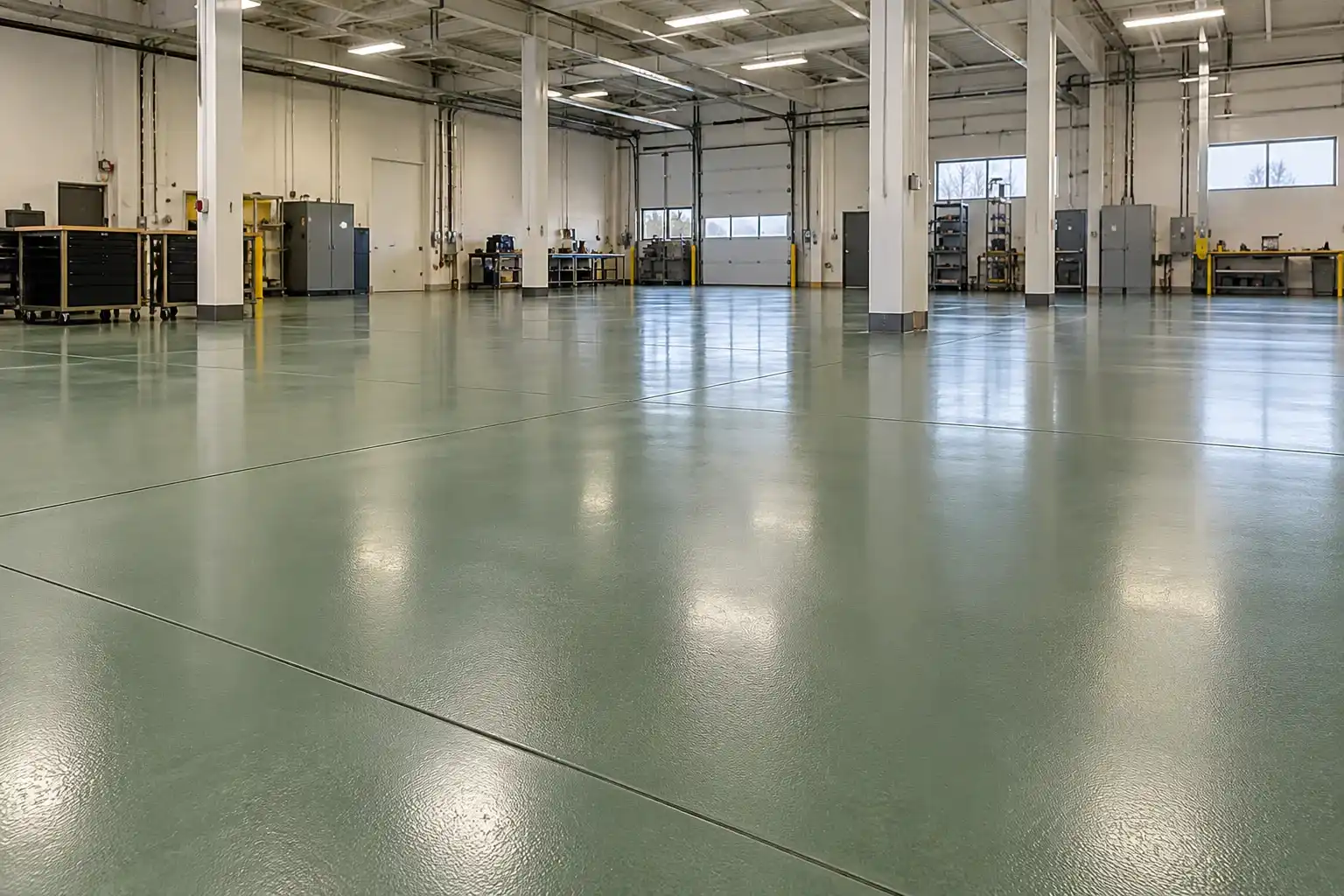
Epoxy suits a bay that spends its days behind a closed door, a shop floor under equipment, and a build where thickness carries the wear. Polyaspartic suits an apron, a patio, a west-facing bay, and any floor that has to come back into service inside a week. Neither product is bad at its job. Asking one to do the other job is where floors go wrong.
Good to know
The west-facing door is the whole argument
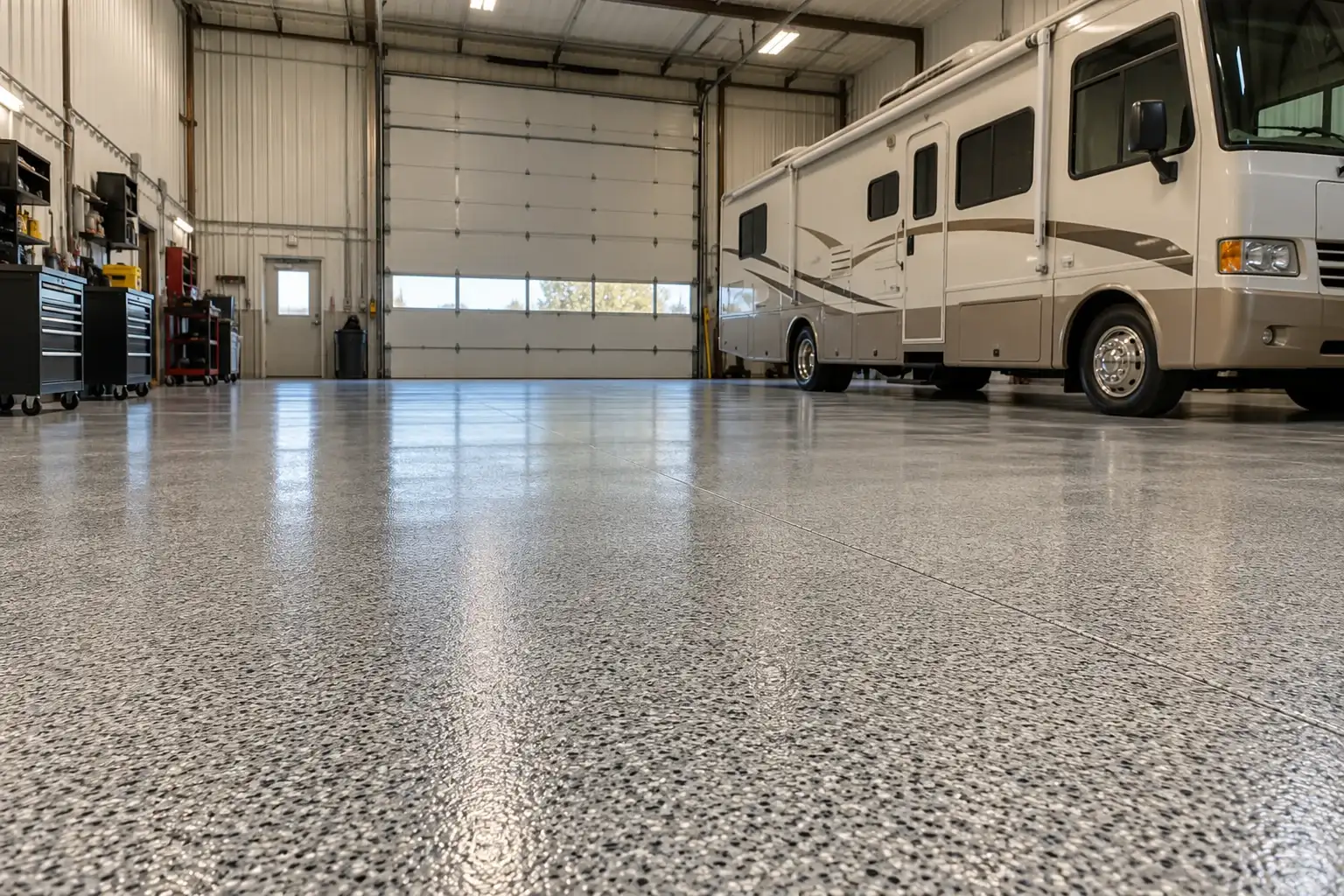
For a west-facing garage door in Mesa, the topcoat is the part that decides whether the floor stays the color it was poured. That door takes the afternoon sun for hours, and the topcoat is the surface the light hits. An epoxy film carries no UV protection, and sun discolors it the way it discolors a plastic chair left out on the patio. The UV-stable topcoat over it is what holds the color underneath, per a garage flooring guide.
That is not an argument against epoxy. It is an argument for putting the right product on the outside of the build. A flake floor with a polyaspartic topcoat is built to keep the flake color. A solid epoxy floor in the same doorway can discolor over the years, and washing it does not bring the original color back.
Systems
The build that uses both
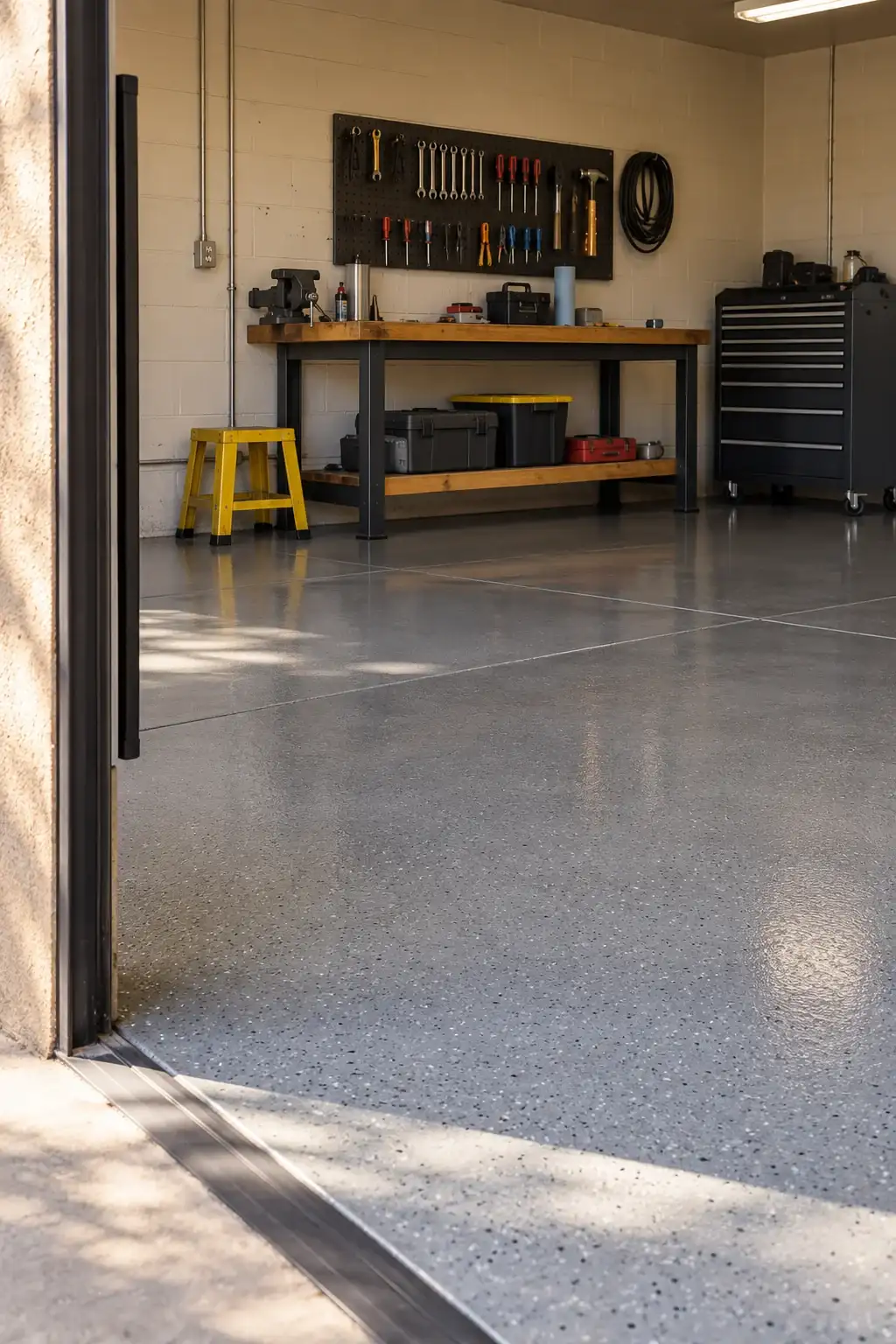
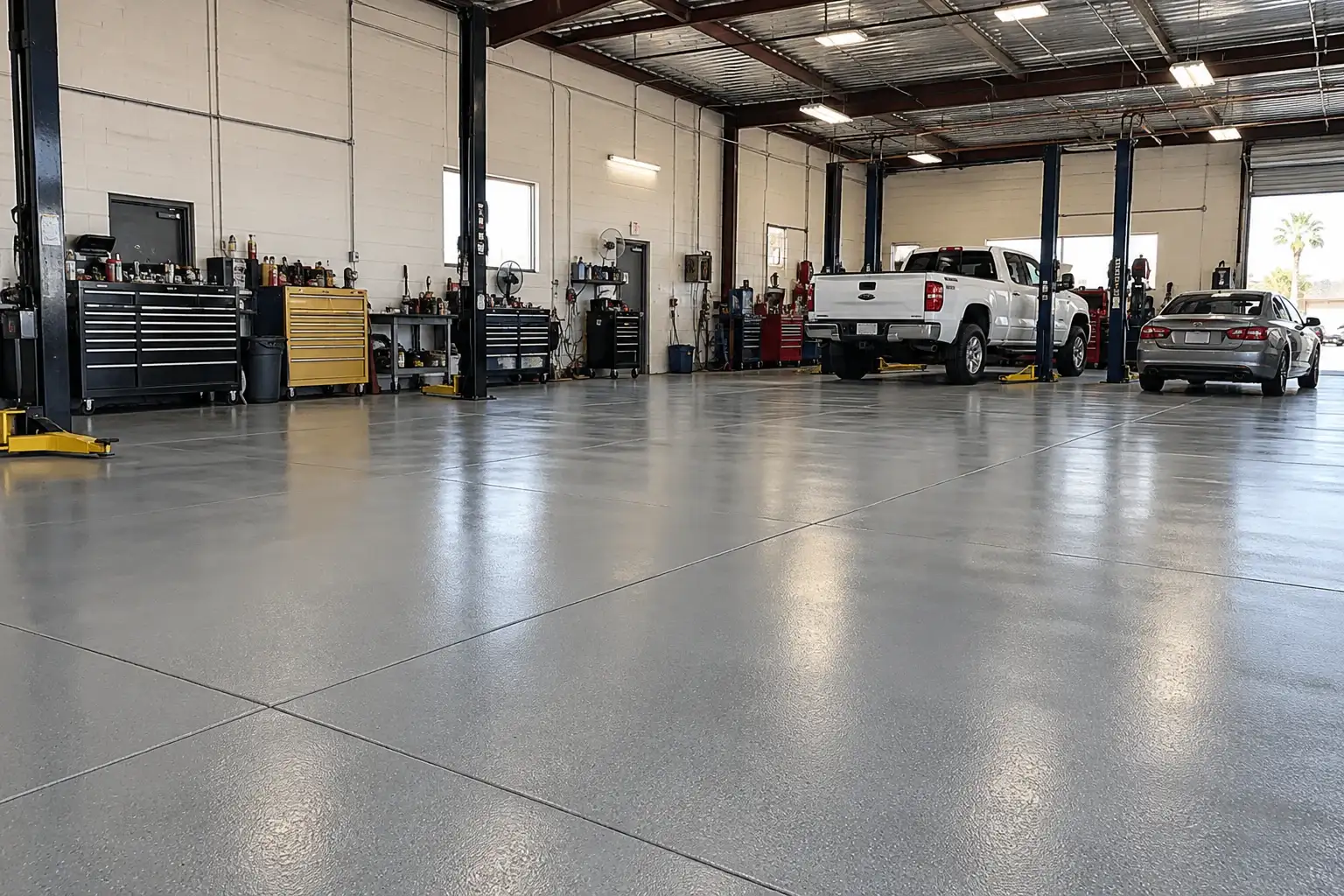
A flake garage floor can be an epoxy base with a polyaspartic topcoat, and that pairing is why the question is not either/or. The base goes down, flake is broadcast into it while it is still open, and the topcoat seals the flake and takes the wear. An epoxy flooring guide lists a polyaspartic topcoat at 3 to 5 mil per coat and a flake garage build at 20 to 30 mil.
Split that way, each product does what it is good at. The epoxy fills, builds and carries the color. The polyaspartic takes the sun, the tires and the cleaning. A build that names one product at one thickness leaves one of those jobs undone.
Planning
The cure clock, in hours you can plan around
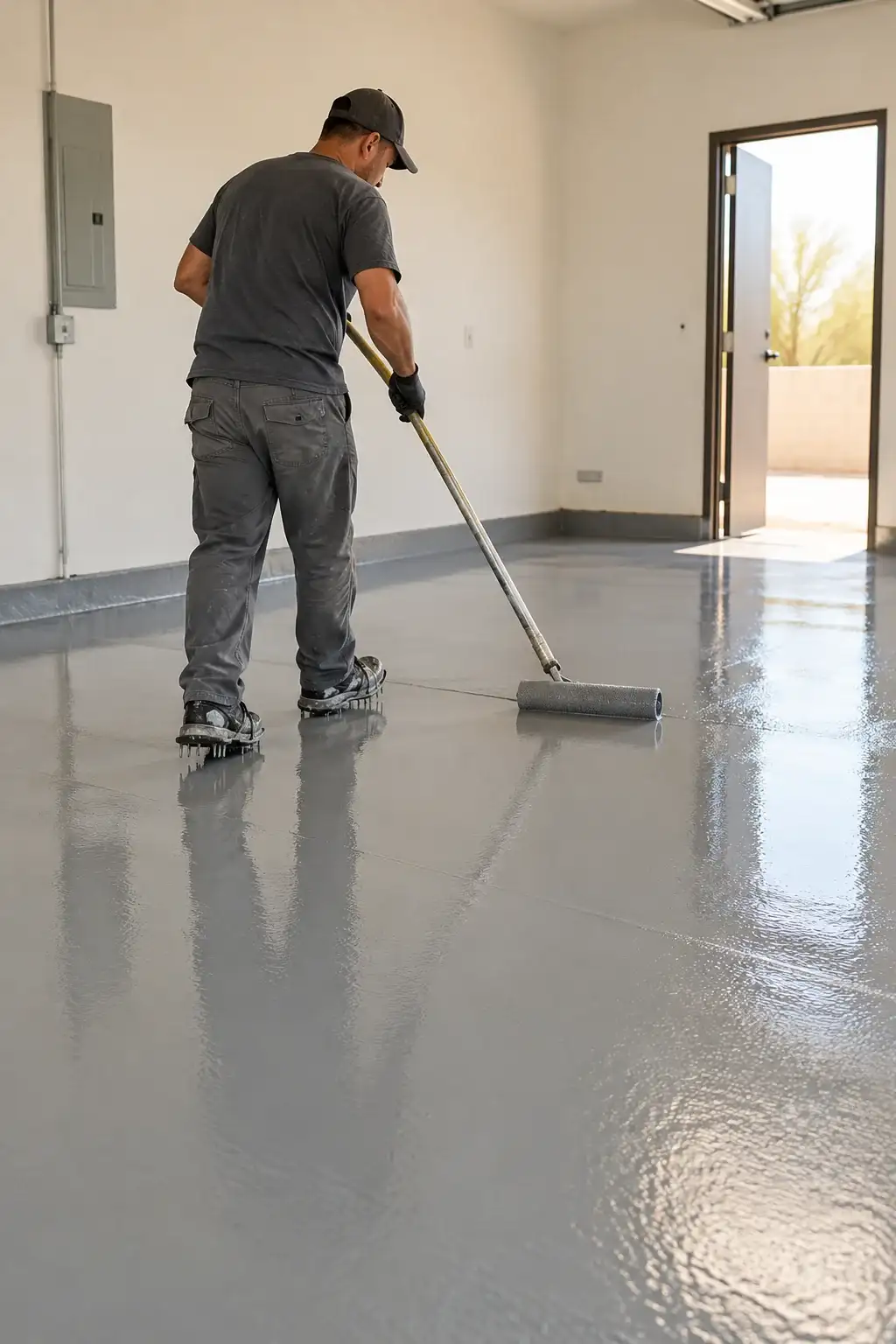
Certain polyaspartic stages can set in 20 to 60 minutes, and in warm conditions a garage flooring guide puts feet on the floor at 12 hours, normal use at 24, shelves and boxes at 48 and a car at 96. HomeGuide (opens in a new tab) lists polyaspartic at 1 to 2 days to cure and epoxy at up to a week, so the clock depends on the system and the conditions.
For a working garage that is the real difference. A floor that takes cars after 4 days is a floor a household can live around. A floor that needs a week is a week of cars in the driveway, and in a Mesa summer that is a week of sun on paint.
5 questions
Questions people ask
Still have a question? Call (747) 243-2089 and describe the floor.
Is polyaspartic better than epoxy?
Neither one wins at everything. Polyaspartic is the more flexible, more UV-stable product, and it costs more per square foot. Epoxy builds thickness for less money. A floor that sees daylight is a good candidate for both, with epoxy underneath and polyaspartic on top.
Can a polyaspartic topcoat go over an existing epoxy floor?
It can, if the old floor is sound. The surface gets ground and cleaned first, and any area that is peeling or lifting comes off, because a new coat over a failing one fails with it. A slab that has been sealed or painted starts somewhere else: with what is on the concrete now.
How soon can a car park on it?
Vehicle traffic at 96 hours in warm conditions (96 to 120 hours in cold ones, per a garage flooring guide), so the car stays out for at least 4 days. Feet can go on the floor at 12 hours and the shelves can go back at 48, but the tires are the last item on the schedule.
Does the topcoat add much to the bill?
It is a per square foot difference, not a per project one. HomeGuide publishes polyaspartic at $5 to $12 per sq ft (HomeGuide (opens in a new tab)) against $4 to $10 per sq ft for epoxy (HomeGuide (opens in a new tab)), so the gap between the 2 full systems is about $1 to $2 per sq ft at each end of the ranges. Those figures are for a full coating of each type, not for a topcoat alone.
What happens when the floor takes hot tires?
A tire can pass 200 F after a long drive, and that heat can soften some films right where the rubber meets it, per a garage flooring guide. A product rated for vehicle traffic, the full vehicle cure and a slab ground before the first coat all help keep a tire from taking the floor with it. When one of those 3 is missing, the mark left behind can be bare concrete rather than a scuff.
Keep reading
Related
- Garage floor epoxy in Mesa
- Commercial epoxy for shops and bays
- Residential epoxy for patios and laundry rooms
- Epoxy flooring cost in Mesa
- The Mesa epoxy flooring guide
- Gilbert epoxy flooring
- Chandler epoxy flooring
- Industrial Epoxy Flooring: Call (747) 243-2089
- Concrete Prep and Coatings: Concrete prep in Mesa is the part of the job that disappears under the finish and the part that decides how long the finish stays.
- How an install runs
- Floor looks
- Areas around Mesa