Epoxy floors · Scottsdale, AZ
Scottsdale epoxy flooring company for showroom floors
A Scottsdale floor is on show. A collector bay behind a glass door, a showroom with the lights on, a hangar at the Airpark: each one gets looked at before it gets walked on. Tell us what the room has to present and what wheels cross it, and someone from our team calls you back to plan your Scottsdale epoxy flooring project.
The slab
What a showroom floor has to hold
Scottsdale reads around 1,260 ft near Old Town, per a USGS 3D Elevation Program point query. The median year built is about 1991, and about 44 percent of the city's housing went up between 1980 and 1999, according to the ACS 2020-2024 5-year release. Younger concrete is not automatically dry or flat, which is what a showroom finish exposes. USPS assigns 85251, 85257 and 85260 to Scottsdale as their primary city.
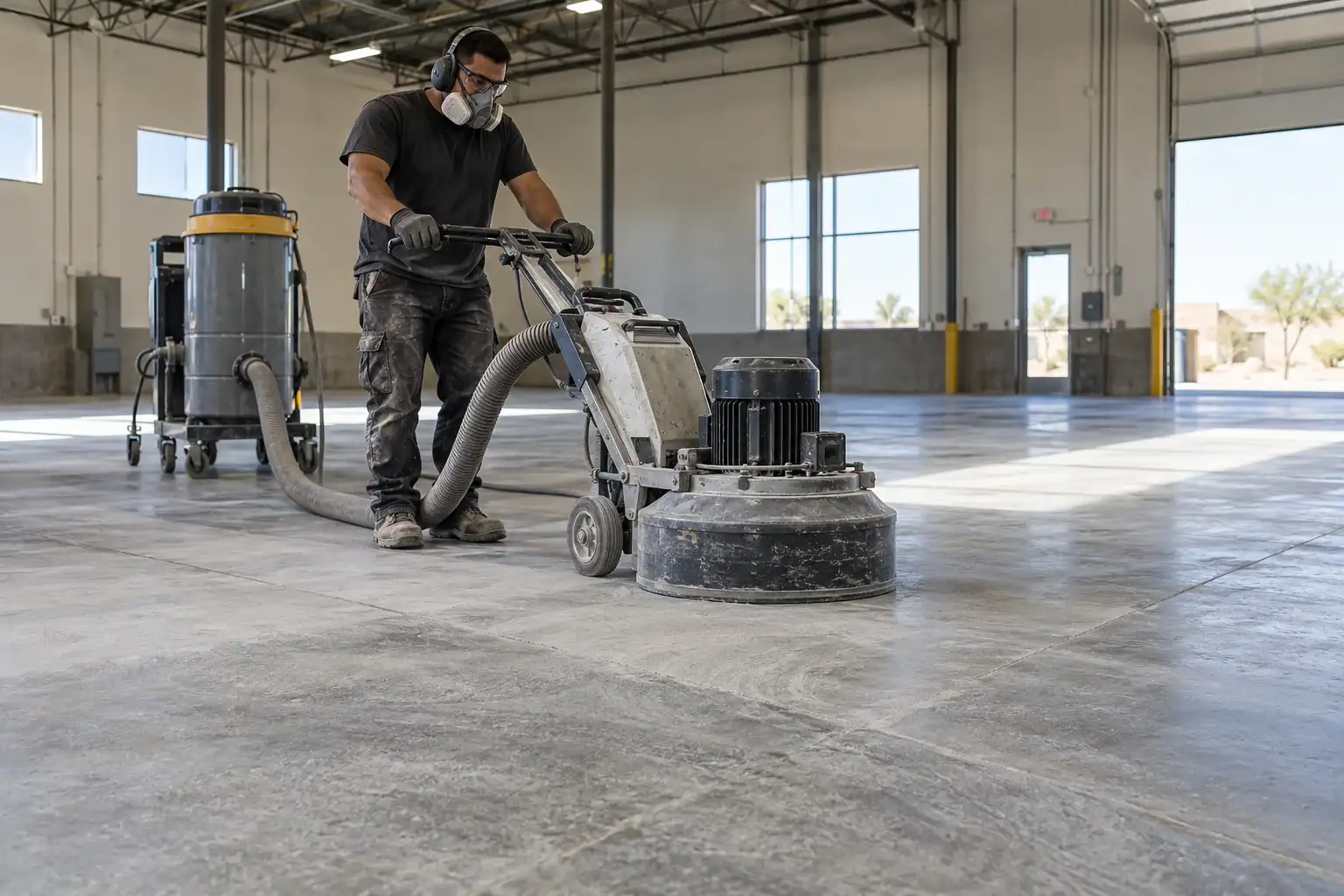
- A grind that takes the slab flat, because a downlight shows every ridge a trowel left.
- A UV-stable topcoat on any floor within sight of a door or a storefront window.
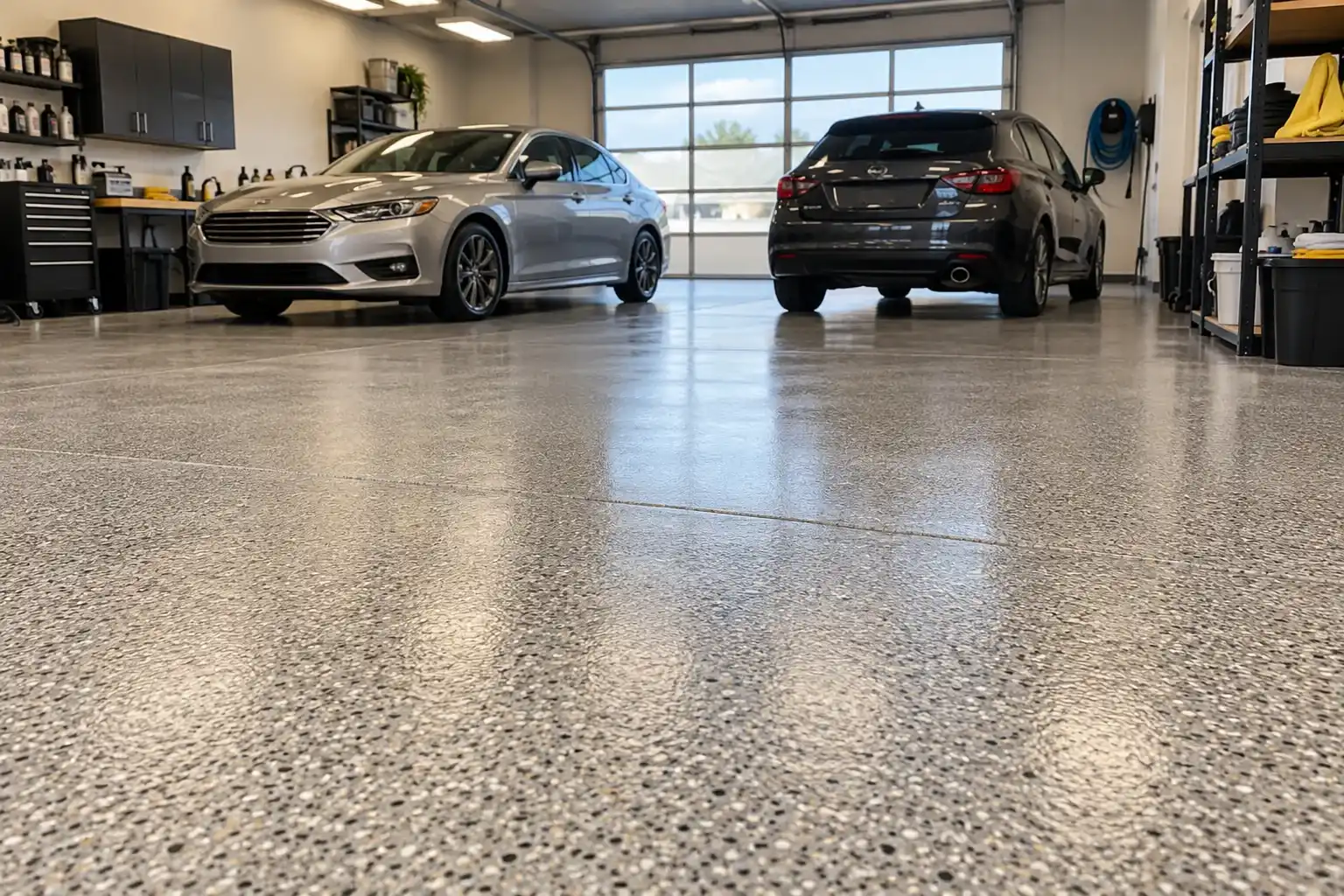
- A solid color or a flake broadcast chosen for the room.
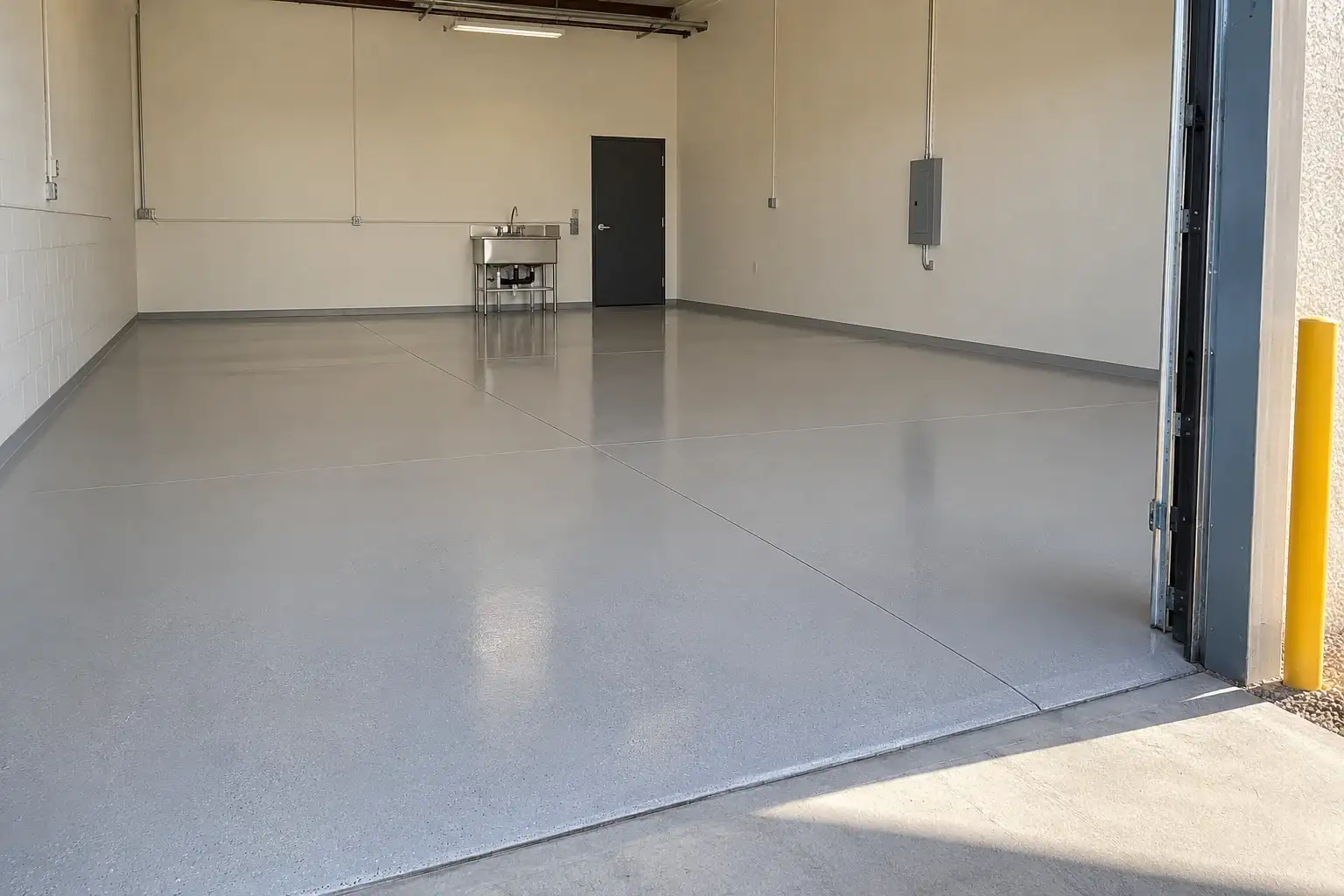
- Crack and joint repair finished flush, so a polished field is not broken by a line.
- A cure window that fits a delivery date.
Systems
The floors that fit Scottsdale buildings
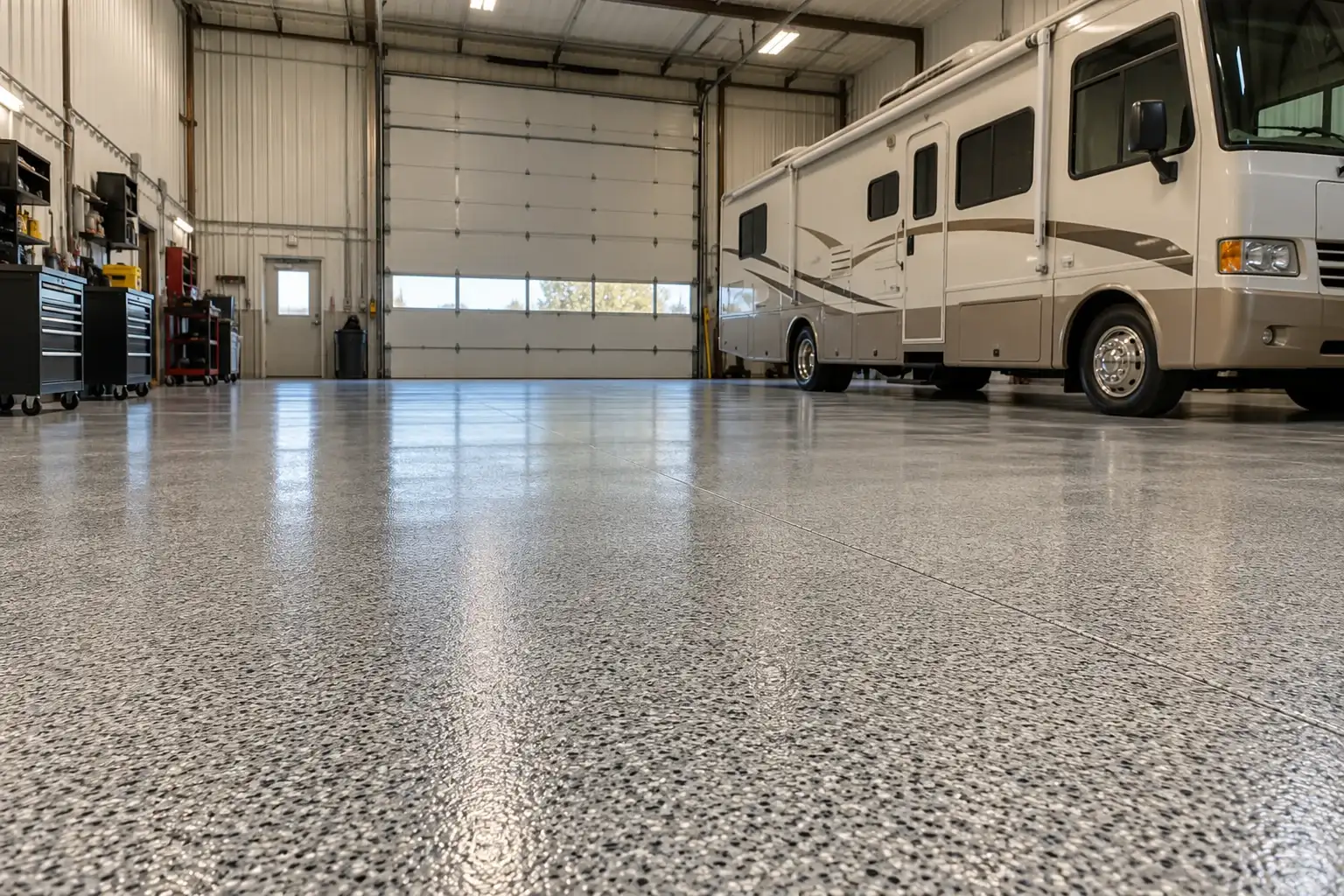
Much of the commercial square footage sits in the Scottsdale Airpark. The City of Scottsdale's Greater Airpark plan puts Thunderbird Road to the south, Scottsdale Road to the west and 90th Street and the Loop 101 (the Pima Freeway) to the east, and Scottsdale Airport, which sits inside it, logged nearly 170,000 takeoffs and landings in 2022, per the City of Scottsdale. A hangar floor meets aviation fuel, oil, hydraulic fluid and a tire with a small contact patch, so the build goes heavy: a 40 to 60 mil quartz system or a troweled floor.
Old Town is the other end of the market. The district of galleries, museums, restaurants and retail is governed by the Old Town Scottsdale Character Area Plan, per the City of Scottsdale, and a floor there is judged on how it looks at 7 pm with the lights on. A 10 to 20 mil solid epoxy under a polyaspartic topcoat can hold its color and take foot traffic.
Signs
4 signs a Scottsdale floor is going
The flake has gone chalky near the door. Sun through glass breaks down a film with no UV protection, and the fade stopping at the shade line is the tell.
A tread outline sits in bare concrete. Hot tire pickup removes the coating instead of staining it, and the shape of the tire is left behind.
Raking light shows waves in the finish. A floor that was never ground flat reads like a dirt road under a downlight, and more coats can make it worse.
A crack runs out from a control joint. The slab moves with the temperature swing, and a rigid film over a live joint splits on the same line.
3 steps
How the work runs
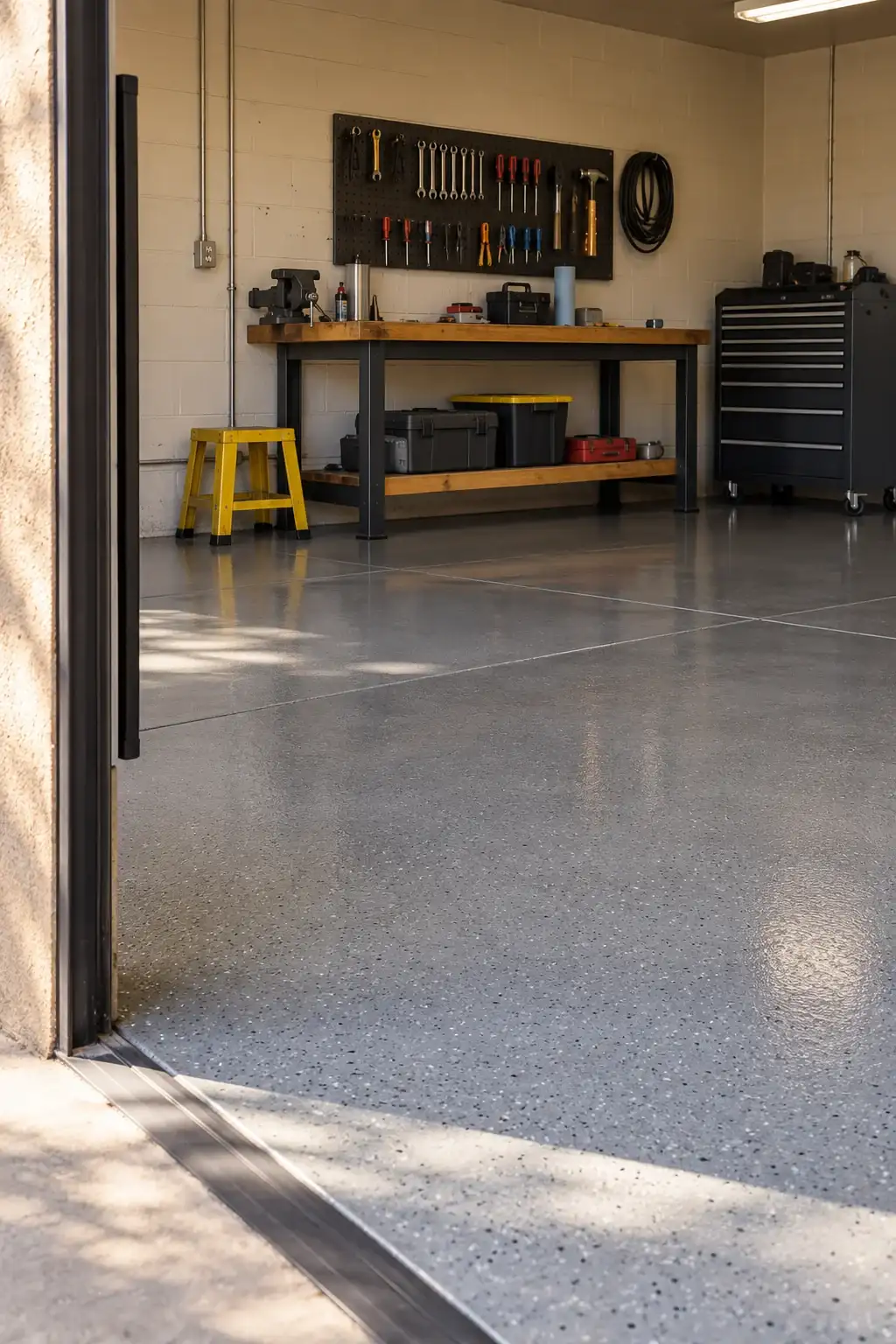
The room gets walked with the lighting on, because a showroom, a hangar and a retail floor are judged in different light.
The slab gets ground, cracks filled and moisture tested, with the readings written into the scope.
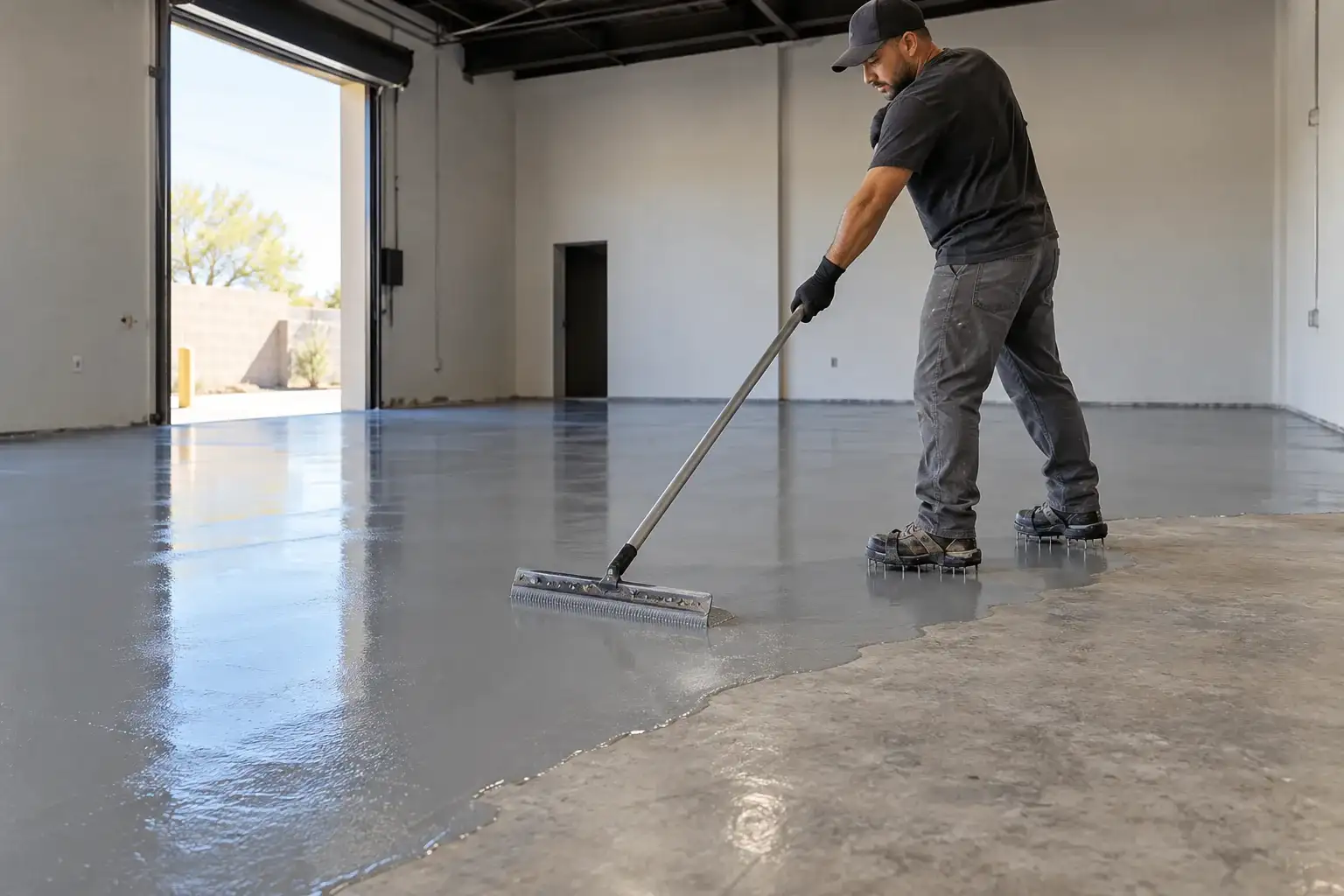
Base, broadcast and topcoat, then the clock. Certain polyaspartic stages can cure in as little as 20 to 60 minutes, with foot traffic at 12 hours and a vehicle at 96 hours in warm conditions, per a garage flooring company's guide.
Costs
What epoxy flooring costs in Scottsdale
At $4 to $10 per sq ft installed, per HomeGuide (opens in a new tab), a 2-car garage lands at $1,600 to $5,800. Polyaspartic runs $5 to $12 per sq ft with a 1 to 2 day cure, per HomeGuide's garage coating figures (opens in a new tab), and Fixr (opens in a new tab) puts a polyaspartic floor coating at $5 to $10 per sq ft. Much of what separates a showroom price from a garage price is the prep, not the resin: flat, dust free and even enough to hold a reflection.
Published ranges, not a quote.
3 questions
Questions from Scottsdale owners
Still have a question? Call (747) 243-2089 and describe the floor.
Will a floor behind glass yellow?
It can. Standard epoxy has no built-in UV protection and visibly discolors over time in sun, per a garage flooring company's guide, so a floor that sees daylight needs a UV-stable topcoat. Polyaspartic is the usual answer: it is more flexible and more UV stable, and some builds run an epoxy base under a polyaspartic topcoat.
What is different about a hangar floor?
Fuel, oil and hydraulic fluid land on it, and an aircraft tire loads a small area hard. That calls for a heavy build, 40 to 60 mil in quartz or a troweled system, a chemical-resistant topcoat and filled joints.
What does a collector garage cost?
$1,600 to $5,800 for a 2-car at the published HomeGuide range, and the top of that band can be a full flake broadcast with a polyaspartic topcoat over a ground and patched slab. A single bay is $1,200 to $3,900.